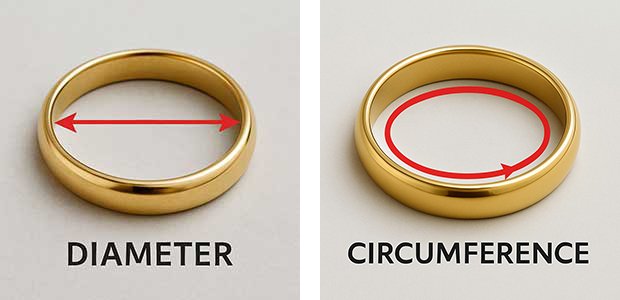
Ring Size Conversion Chart
| Diameter (mm) | Circumference (mm) | UK & Australia | USA & Canada | Europe |
|---|---|---|---|---|
| 14.0 | 44.1 | F | 3 | 44 |
| 14.6 | 46.0 | H | 3.75 | 46 |
| 15.3 | 48.0 | H1/2 – I1/2 | 4.5 | 48 |
| 15.6 | 49.0 | J | 4.75 | 49 |
| 16.0 | 50.3 | J-K | 5 | 50 |
| 16.2 | 51.0 | K-L | 5.5 | 51 |
| 16.5 | 52.0 | L – L1/2 | 6 | 52 |
| 16.9 | 53.2 | M | 6.5 | 53 |
| 17.2 | 54.0 | N | 7 | 54 |
| 17.5 | 55.0 | O | 7.25 | 55 |
| 17.8 | 56.0 | O – P | 7.5 | 56 |
| 18.1 | 57.0 | P | 8 | 57 |
| 18.5 | 58.0 | P1/2 – Q1/2 | 8.5 | 58 |
| 18.8 | 59.0 | R | 8.75 | 59 |
| 19.0 | 60.0 | R1/2 – S | 9 | 60 |
| 19.8 | 62.0 | T1/2 | 10 | 62 |
| 20.4 | 64.0 | V | 10.5 | 64 |
Ring Sizing Tips
📏 How to Measure Your Ring Size
- Measure the largest finger the ring will be worn on.
- Round to the nearest whole millimeter.
- The ring should be snug but not tight—secure enough not to fall off but loose enough to slide over the knuckle comfortably.
- Use a piece of string to wrap around your finger to measure the circumference.
⏰ Measure at Different Times
Finger size fluctuates throughout the day due to temperature and hydration. To get the best fit, measure your finger several times in a day and average the results.
✅ When in Doubt, Size Up
If you’re between sizes, choose the slightly larger size. A tight ring can be difficult to remove or uncomfortable to wear.
💍 Special Ring Styles
- Stackable Rings: Go up one size from your usual for a more comfortable fit.
- Wide Shank Rings: These tend to feel tighter, so we recommend choosing one size larger.
Finding Someone Else’s Ring Size
🎁 Planning a Surprise?
If you’re buying a ring as a gift, here are some discreet methods to find the right size:
- Check Their Jewelry: Borrow a ring they wear and measure the inner diameter with a ruler. Compare it to a ring size chart.
- String Method: While they’re sleeping, wrap a small piece of string around their finger, mark where the ends meet, and take it to a jeweler for measurement.
- Ask Friends or Family: They might know the size or can help compare with their own rings.