Pink and purple opal don’t cross my bench nearly as often as black or white material, and when they do, a customer usually wants to know one thing first: is this a real stone, or a costume-jewelry stand-in? It’s a fair question. The pink and purple opal market has more inexpensive substitutes crowding it than almost any other opal color, so telling the genuine article from the rest matters more here than it does for the classic body tones. Later on I’ll walk through the four things I actually check at the loupe, pattern, color evenness, disclosed origin, and price, to tell a natural stone from a lab-created one, but first it helps to know what pink and purple opal actually are.
What pink opal actually is
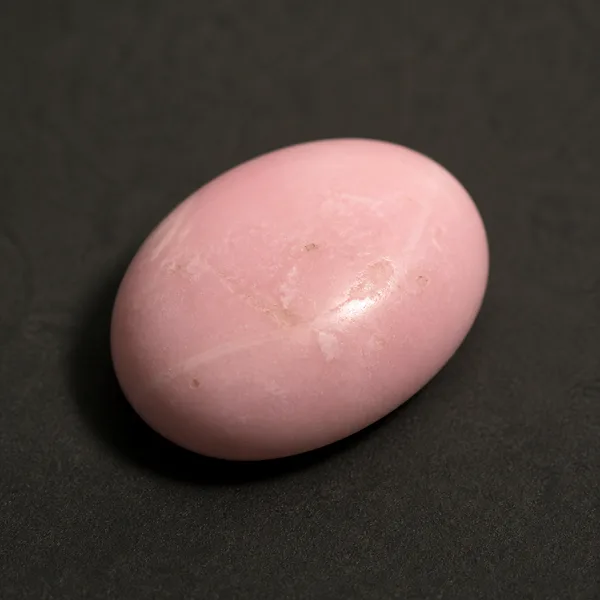
When most people search for pink opal, they mean a common opal from Peru: a soft, chalky bubblegum-pink to rose stone, opaque to lightly translucent, sometimes carrying faint white veining. It comes from a handful of deposits in the Andes, mined from volcanic host rock rather than the sedimentary opal fields of Australia, a difference in formation I go through fully in how opals are made. This is common opal, the same broad family I map out in my guide to understanding opal: no play-of-color, valued for the body color alone. The pink is generally attributed to trace manganese bound into the silica as the stone formed, the same kind of coloring agent that gives other minerals their pink or violet tint. A true pink flash of play-of-color on precious opal exists too, but it’s rare enough that almost nobody selling “pink opal” jewelry actually means it, a distinction I lay out in more detail in what defines an opal.
Purple opal is the same family, a shade over
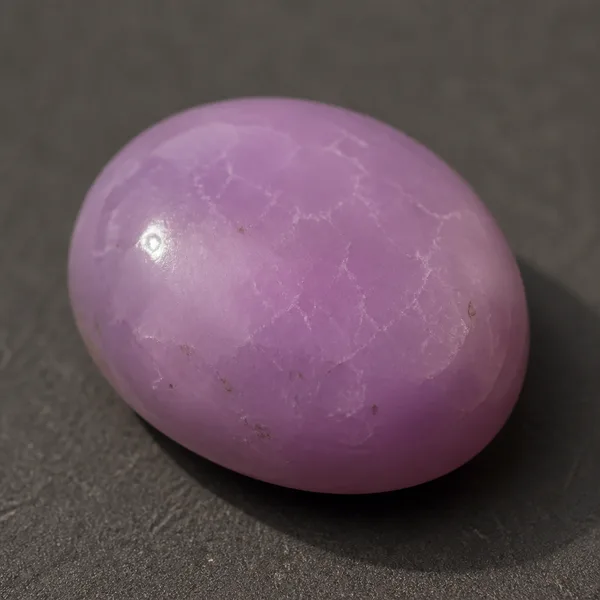
Push that same manganese coloring a little further and you land on purple opal, sometimes called morado opal (Spanish for purple), from the same general Andean fields as the pink material. It runs from a soft lavender to a deeper mauve-violet, and like its pink cousin it’s common opal: no play-of-color, valued for a steady wash of color rather than a moving flash. Here’s where I have to correct something the market gets wrong constantly: Mexican purple opal is not a standard, recognized trade term the way Peruvian pink or purple opal is. Mexico’s opal fields, especially around Querétaro, are known for warm fire opal in orange, yellow and red, plus a clear “water opal,” not violet stones. Most listings calling a stone Mexican purple opal are either Peruvian material relabeled under Mexico’s better-known opal reputation, or a manufactured stone dyed or grown to that color. If a seller tells you a purple opal is Mexican, ask for the actual mine or region, and treat a vague answer as a flag.
Want to see how pink and purple sit next to gold? Browse the opal rings and opal pendants in my current collection, or ask me about a custom piece.
Where red opal fits into this
Red opal usually means the same warm, orange-to-red body color that makes fire opal famous, not a flash of light, and a different question from pink or purple. A true red play-of-color is something else again: the rarest and most valuable flash a precious opal can show, rarer than the blue and green that turn up most often, which I go through in full in my guide to opal play-of-color. Of the three, only the play-of-color version is genuinely scarce; the body-color versions are common enough to find without much hunting once you know what you’re looking at. For the broader picture of how these terms connect, my guide to what opal is is the place to start.
Telling natural pink or purple opal from a lab-created one
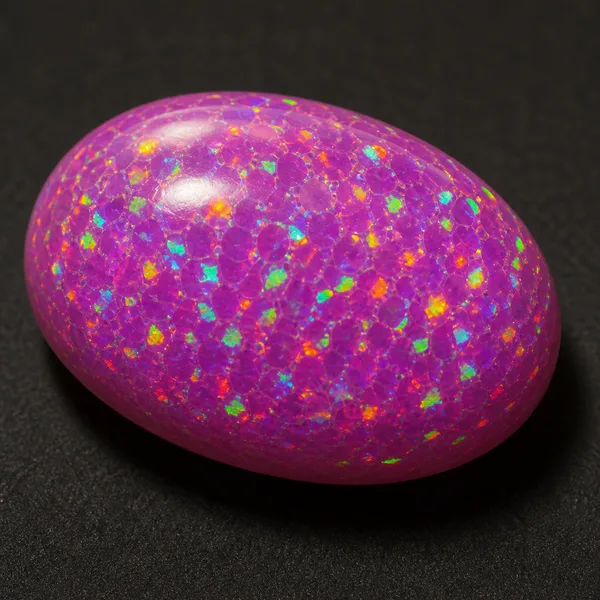
Lab-created opal is a real, recognized category, not a fringe curiosity. GIA’s opal reference covers synthetic and assembled opal alongside the natural material, and manufacturers have sold it in colors, including pink and purple, that occur rarely or never in nature at that saturation. I don’t cast or grow stones; everything I set is cut from rough I buy directly from miners. So when a customer brings me a “pink opal” they’re unsure about, here’s the same checklist I run through at the loupe.
- Look at the pattern up close. Natural common opal shows soft, irregular mottling or veining. Lab-created material often shows an unnaturally regular columnar or honeycomb mosaic, too tidy to be geology.
- Notice whether any play-of-color is perfectly even across the whole stone. Natural precious opal’s flash is patchy, brighter in some spots than others. A rainbow that repeats in identical little tiles is a manufacturing signature, not a natural one.
- Ask where it’s from. A genuine Peruvian pink or purple opal seller can usually name the region without hesitating. A vague or shifting answer is worth pausing over.
- Weigh the color against the price. A large stone in flawless, saturated, perfectly uniform color for very little money is more consistent with a manufactured stone than a natural one, since natural material this evenly colored is genuinely uncommon.
How pink and purple opal hold up in a ring
Natural Peruvian pink and purple opal run soft, roughly 5 to 6 on the Mohs scale, and much of it is porous enough to absorb water, oils and household chemicals over time, which can dull or change its look. I set it the way I set any soft, porous stone: a bezel that protects the girdle, and a plain word to the customer about keeping it away from lotion, dish soap and the shower. Some pale material is also dyed to deepen a weak natural color, a legitimate treatment as long as a seller discloses it, so ask if that matters to you. A pendant or earrings take daily wear better than a ring, since they miss most of the knocks a ring absorbs, but I’d still steer any of these stones toward a bezel over open prongs.
What the color is said to mean
Opal carries a long history of symbolism generally, which I cover at length in the meaning of opal. Pink stones get tied to affection and comfort in a lot of that tradition, purple to intuition and calm, the same associations given to other pink and purple gems. That’s folklore and personal meaning, not gemology, and I’d rather say so plainly than dress it up. If the story behind a stone matters to you as much as its look, it’s worth choosing for both reasons together.
Pink and purple opal earn their names honestly when they’re the real Andean material; the confusion starts the moment a seller borrows those names for something else. Browse the opal rings and opal pendants in my shop, or get in touch and tell me which shade you have in mind.

Richard Lewis has worked at the jeweler’s bench for more than fifty years. He trained at the Revere Academy of Jewelry Arts in San Francisco and makes each piece in this shop by hand in his Santa Rosa, California studio. His specialty is natural opal and rare abalone pearls collected off the Mendocino coast over thirty years. More about Richard.