After fifty years at the bench, I still get a small thrill unwrapping a new parcel of opal. No two stones are ever alike, and a good one holds a fire that no other gem can match. Opal also confuses people more than almost any stone I sell, partly because there are so many kinds and partly because the names get thrown around loosely. So here is the plain version: what opal actually is, the main types you will meet, what makes one worth more than another, and how to choose the one that suits you.
What gives opal its color
That shifting flash, the thing that makes you tilt a stone back and forth in the light, is called play-of-color. It happens because opal is built from tiny spheres of silica stacked in a regular grid. When light passes through that grid it breaks into spectral colors, much the way a soap bubble or a butterfly wing throws off color. The size and spacing of those spheres decides which opal colors you see and how broad the flashes are. It is a structural effect rather than a pigment, which is why the color moves as the stone moves. Where that silica instead fills the space left by an ancient shell or bone, you get an opalized fossil.
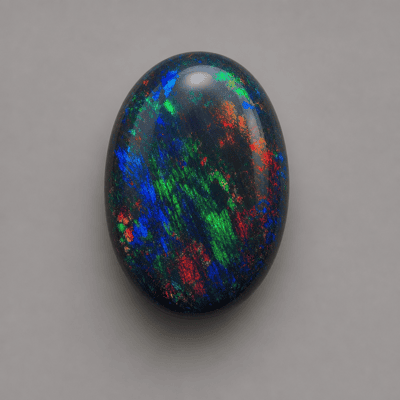
One thing worth knowing early: the background of the stone, what jewelers call the body tone, runs from black, the deep end of the opal body tone scale, through gray to white and on to water-clear. As a rule, the darker the body tone, the more the colors pop against it. That single fact explains most of what follows, including why black opal sits at the top of the tree. For a closer look at the patterns and body tones, see my visual guide to what opal looks like.
The main types of opal
People talk about opal as if it were one thing, but the type changes how a stone looks, what it costs, and how you should wear it. Below are the ones you will meet most often; for the full list, including the rarer kinds, see my complete guide to the types of opal and the standout rare opal varieties.
 Black opal has the darkest body tone and, for many collectors, the most dramatic color. The finest comes from Lightning Ridge in Australia and reaches the highest prices in the opal world. I go deeper in my guide to black opal.
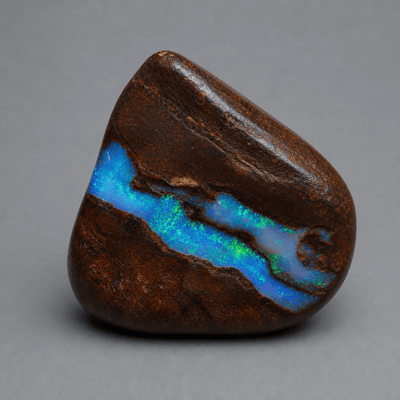
- Boulder opal forms as seams inside ironstone and is usually cut with that brown host rock left on the back. The backing makes it tough, which is why I often suggest it for rings.
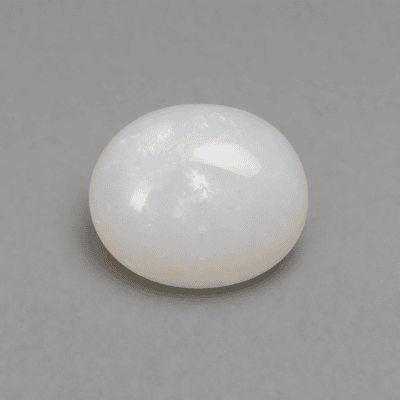
- Crystal and white opal are the lighter stones. Crystal opal is translucent, with the color seeming to float inside it; white opal has a paler, milky body and a softer look.
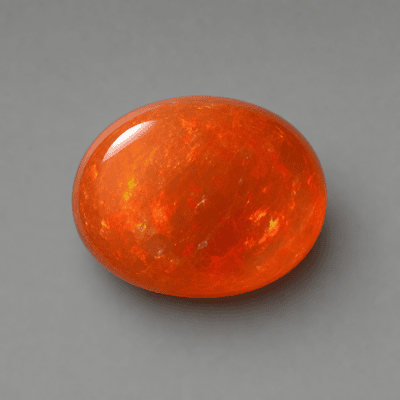
- Fire opal is named for its warm body color, the oranges and reds most often found in Mexican material. Some shows play-of-color and some is loved simply for that glow.
- Ethiopian (Welo) opal arrived in quantity only in the last fifteen years and won people over fast with vivid color at a friendly price. Much of it is hydrophane, meaning it can absorb water, so it asks for a little more care. I compare it with Australian material in Ethiopian vs Australian opal.
- Australian opal is the long-standing benchmark: stable, mostly non-porous, and easy to live with day to day.
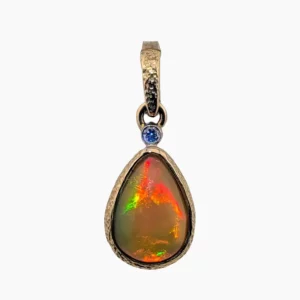
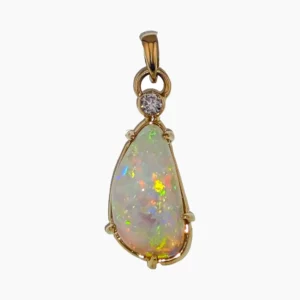
Looking for an opal of your own? Explore the handcrafted opal rings in my collection, each set with a stone I chose by hand.
What makes one opal worth more than another
Price comes down to a few things. Body tone is the big one, with black commanding the most and white the least, all else being equal. After that I look at brightness, meaning how vivid and lively the play-of-color is; pattern, since broad rolling patterns are rarer than tiny pinfire; and the dominant color, where red is the rarest and usually the dearest. And a solid natural opal is worth far more than a doublet or triplet, which are thin slices backed or capped to mimic a bigger stone. I walk through all of it with examples in how much is opal worth.
Looking after your opal
Opal is softer than sapphire or diamond, around 5.5 to 6.5 on the Mohs scale, and some of it holds a little water, so it likes gentle handling. The short version is warm water, a drop of mild soap, and a soft cloth. Never an ultrasonic cleaner or a steamer, and take a ring off for anything rough or wet. I go further in how to care for opal jewelry, including the extra step or two that hydrophane Ethiopian opal needs.
So which opal is right for you
For a ring you plan to wear often, I usually point people toward Australian or boulder opal, because both handle daily life better than most. For the most color per dollar, Ethiopian is hard to beat, as long as you are happy to keep it away from long soaks. And for a piece you will treasure and wear with a little care, a fine black opal is the one that stops people in the street. Pendants and earrings see far less wear than rings, so there you can let the stone lead and not worry much about toughness.
Frequently asked questions
Are opals bad luck? No. That idea traces back to a nineteenth-century novel, not to any real history. For most of recorded time opal was seen as a stone of good fortune. I dig into the folklore in opal meaning and symbolism.
Is Ethiopian opal real opal? Yes. It is genuine precious opal with the same play-of-color as Australian opal. The main difference is that much of it is porous and can take in water for a while before it dries out.
Can I wear an opal ring every day? You can, with care. Take it off for gardening, the gym, and washing up, and have the setting checked once a year.
Is opal a birthstone? Yes. Opal is the birthstone for October, which it shares with tourmaline, and the traditional gift for a fourteenth anniversary. I cover it in my guides to the October birthstone and the opal birthstone.
Every opal I set is chosen by hand, and most of my pieces are one of a kind. Browse the current opal rings and opal pendants, or talk to me about a custom piece built around a stone you love.

Richard Lewis has worked at the jeweler’s bench for more than fifty years. He trained at the Revere Academy of Jewelry Arts in San Francisco and makes each piece in this shop by hand in his Santa Rosa, California studio. His specialty is natural opal and rare abalone pearls collected off the Mendocino coast over thirty years. More about Richard.