More than one customer has come to the counter holding a stone they were told was black opal, puzzled that it does not actually look black. The honest answer is that they are usually holding dark opal instead, a real grade with its own name, sitting a step or two down the same scale from true black. Dark opal and black opal are close cousins, not the same stone, and the difference is not marketing. It is a measurement jewelers use every day.
Dark opal is not black opal
Every opal has a body tone, the background the stone’s color sits against, running from black through gray to white. That single measurement, not the flashing color itself, is what separates a black opal from a dark opal from a white opal, and it is part of the bigger picture I cover in my guide to understanding opal. Black opal occupies the darkest end of that scale. Dark opal, sometimes called semi-black opal, sits just below it: dark enough that color still reads with real punch, not dark enough to earn the black opal name. Confusing the two is an easy mistake, since both throw bright color against a dark background, and even sellers blur the line more than they should. Gemological references such as GIA’s opal guide treat body tone as one of the core value factors in any opal, right alongside the play of color itself, which is exactly why the trade built a numbered scale for it in the first place.
Want to see the difference in person? Compare dark and black material in the opal rings in my current collection, or ask me about a custom piece.
The body tone scale, N1 to N9
Opal graders use a nine-step scale, N1 through N9, to record body tone under consistent, face-up lighting. It runs like this:
| Grade | Trade name | What you are looking at |
|---|---|---|
| N1 to N2 | Black opal | The darkest bodies opal comes in, true black to near black. |
| N3 to N4 | Black opal, dark gray end | Still classed as black opal, a shade or two lighter than N1 to N2. |
| N5 to N6 | Dark opal, or semi-black opal | Gray to light gray. Dark enough to lift the color noticeably, not dark enough to be called black. |
| N7 to N9 | Light or white opal | Gray-white through white. The color still shows, but the background does none of the work for it. |
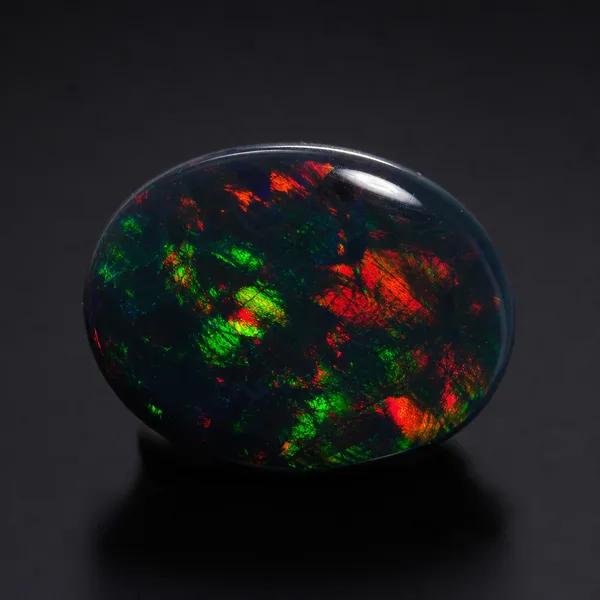
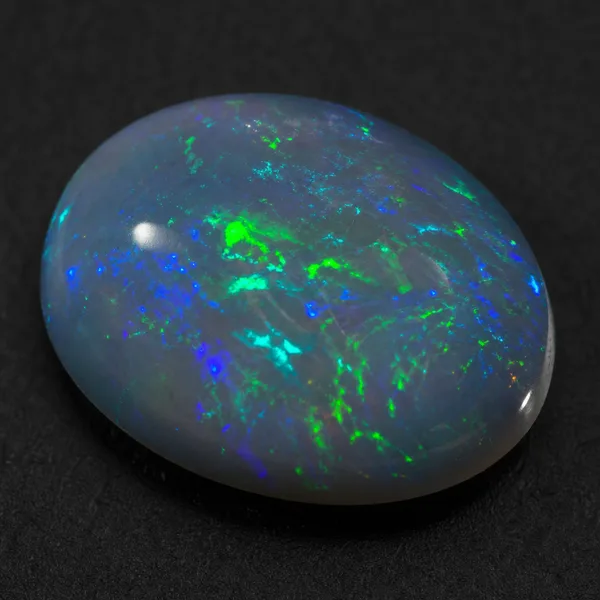
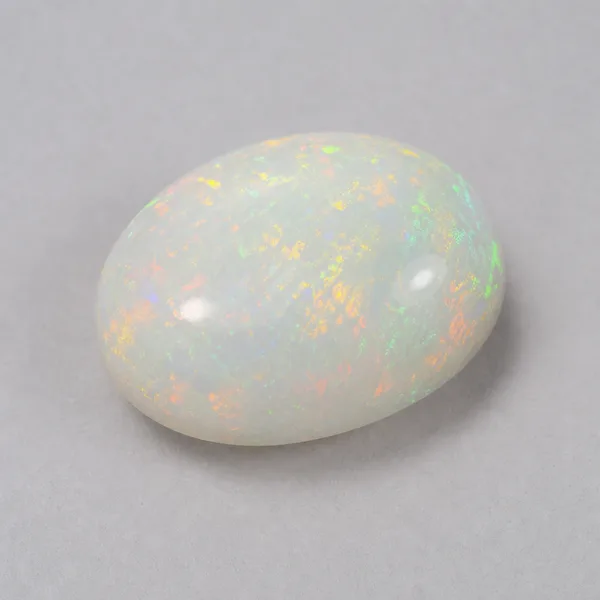
A black opal sitting at N1 or N2 and a dark opal at N5 can carry the same red and green pattern and still read as two different stones, purely because of what sits behind the color. Seeing three bodies side by side makes the point clearer than any chart:
 Black opal (N1 to N2). A body so dark the color looks lit from within, with almost nothing of the background itself showing through.
- Dark opal (N5 to N6). A visible gray body, still dark enough that the color reads with real depth, honest about not being black.
- Light opal (N7 to N9). A pale, near-white body. The same color pattern reads softer here because there is no dark backdrop behind it.
Why dark opal earns its own name
Dark opal is not black opal’s discount cousin. It is its own honest category of precious opal, not the colorless mineral called potch that shows no play of color at all and is not sold as a gem; I go through that line in my guide to what defines an opal. What dark opal gives you is most of what draws people to black opal, a background dark enough to make color read with real depth, at a price the true N1 to N2 material rarely reaches. If black opal is out of reach and light opal feels too pale for the piece you are picturing, dark opal is often the honest middle ground rather than a compromise.
Reading a stone’s tone at the bench
When I check a parcel of rough or a finished stone for tone, I look at it face up under even, natural light, never through the back and never under a single hard spotlight that can trick the eye into reading a stone darker or lighter than it really is. After decades of doing this by eye, I still keep reference stones on the bench to check myself against, because tone is one of those calls that drifts if you trust memory alone. Some of the variation between one parcel and the next comes down to the host rock the opal formed in, which I cover in how opals are made. It is also why two people can look at what seems like the same stone and land a grade apart, a gap that trained eyes and comparison stones close. If you are new to opal generally, my plain starting point is what is opal.
Setting and wearing dark opal
Dark opal wears the same as any other opal: soft compared with the diamonds and sapphires it often sits beside on the bench, typically 5.5 to 6.5 on the Mohs scale. I set it the way I set black opal, usually a bezel that protects the girdle and edge rather than prongs that can chip a corner over years of wear. The darker body also helps hide the odd fine inclusion that would stand out starkly against a pale white opal, one more small point in dark opal’s favor.
Dark opal is not a lesser stone hiding under a bigger name. It is its own honest step on a nine-point scale that runs from true black to white. If the folklore and symbolism side of opal interests you as much as the grading does, I cover that separately in the meaning of opal. For now, browse the opal rings and opal pendants in my current collection, or get in touch and I will help you find a stone whose tone actually suits what you have in mind.

Richard Lewis has worked at the jeweler’s bench for more than fifty years. He trained at the Revere Academy of Jewelry Arts in San Francisco and makes each piece in this shop by hand in his Santa Rosa, California studio. His specialty is natural opal and rare abalone pearls collected off the Mendocino coast over thirty years. More about Richard.