Most opal you meet is one of the everyday types: white, crystal, boulder, the warm orange of fire opal. Now and then, though, a stone turns up that makes even a jeweler of fifty years put down his loupe and just look. These are the rare varieties, prized either for an unusual pattern or for some trick of how they hold the light. Here are the ones worth knowing, and what makes each so sought after.
Harlequin opal
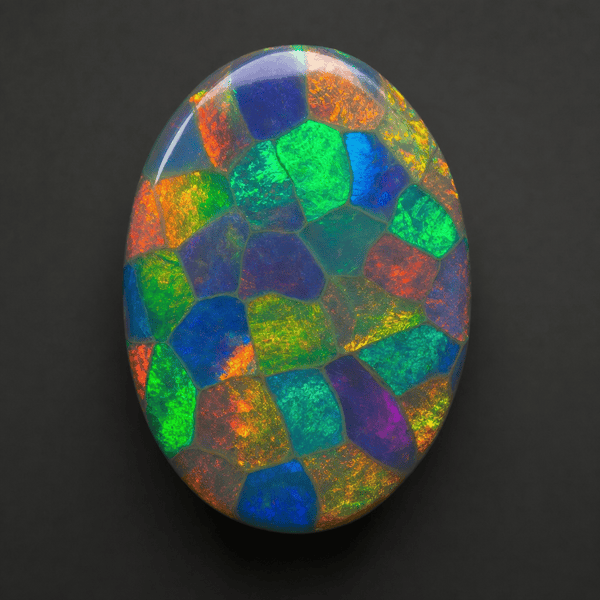
Harlequin is the pattern collectors chase hardest. The play-of-color forms a mosaic of broad, roughly equal patches, like a stained-glass window or a checkerboard, rather than tiny pinpoints. True harlequin is genuinely rare, the name is often used too loosely, and a real one with bright color is among the most valuable opals you can buy. If the seller is quick to call something harlequin, look closely.
Contra luz opal
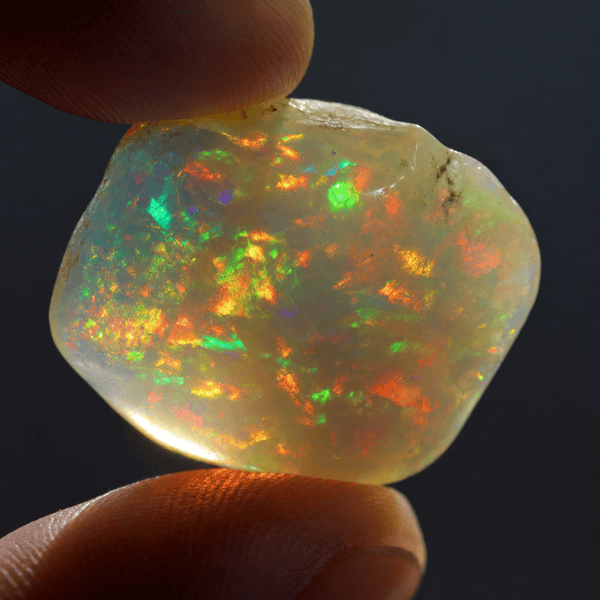
Contra luz means “against the light.” These stones show their color best when light comes through them from behind rather than bouncing off the front, so they seem to switch on when you hold them up to a window. Much contra luz comes from Mexico and Ethiopia, and a good one is a quietly magical thing.
Red on black
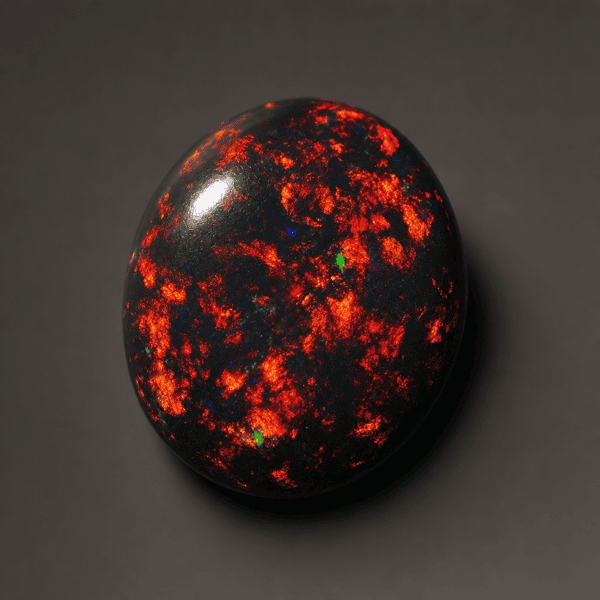
The single most valuable combination in opal is a bright red play-of-color over a true black body, from Lightning Ridge. Red is the rarest color because it needs the largest, most even silica spheres, and against a black body it is at its most intense. A fine red-on-black stone sits at the very top of the market. I explain the pricing in how much is opal worth.
Looking for something out of the ordinary? Browse the handcrafted opal rings in my collection, or ask me about sourcing a rare stone for a custom piece.
Yowah nuts and Andamooka matrix
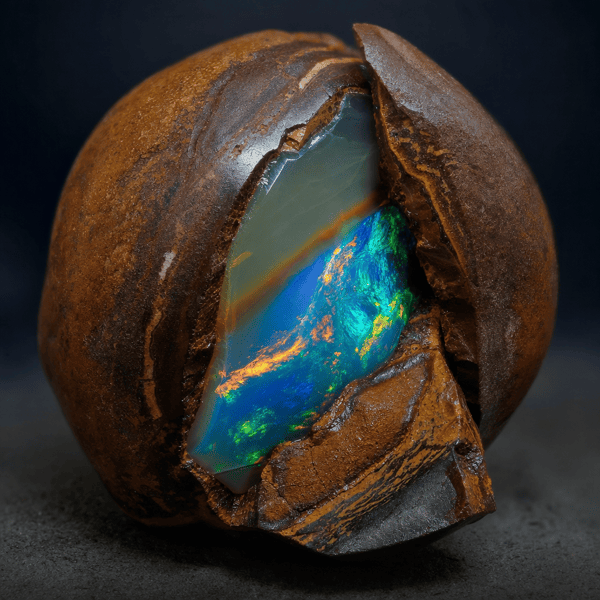
From the Queensland boulder fields come Yowah nuts, small ironstone nodules that, when split open, can reveal a kernel of bright opal inside. They are a favorite with collectors for the surprise as much as the stone. Andamooka matrix is a porous light opal that is traditionally treated to darken the background and bring the color forward, an old and accepted practice for that particular material. Both sit in the wider family of boulder and matrix opal.
Virgin Valley opal
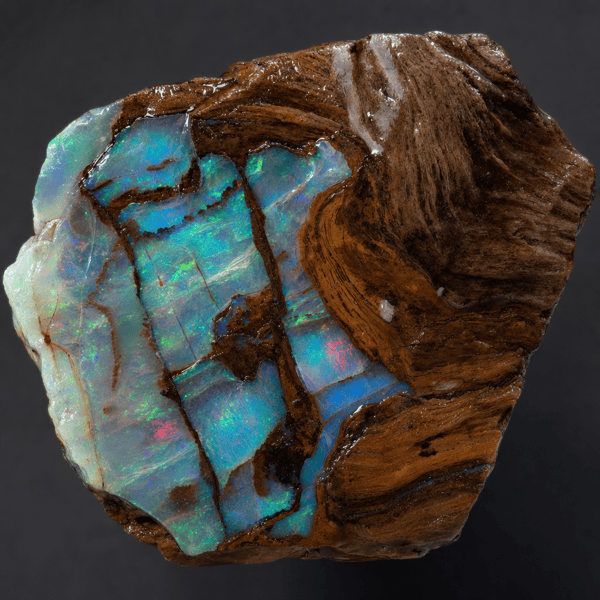
Nevada’s Virgin Valley produces striking black opal, some of it opalized wood, with vivid color. The catch is that a good deal of it holds a lot of water and can craze or crack as it dries, so much of it is kept and displayed in water as a specimen rather than set. Beautiful, but one for the knowing collector.
Frequently asked questions
What is the rarest type of opal? A bright red-on-black stone from Lightning Ridge with a true harlequin pattern would be about as rare as opal gets. Each of those features is uncommon on its own, and together they are exceptional.
What is the rarest opal color? Red. It requires the largest and most uniform silica spheres, which are the hardest to form, so red play-of-color is the rarest and usually the most expensive.
Is harlequin opal really that rare? Yes. Genuine harlequin, with a true mosaic of broad equal patches, is one of the scarcest patterns. The term is widely misused, so buy on the strength of what you see rather than the label.
For where these fit among the everyday stones, see my guide to the types of opal, or the broader understanding opal. You may also come across trade names like aurora, galaxy, or rainbow opal; I explain what those names actually mean, and a stone that shows one moving band of light rather than patches is a cat’s eye opal. If a rare stone is what you are after, talk to me and browse the current opal rings.

Richard Lewis has worked at the jeweler’s bench for more than fifty years. He trained at the Revere Academy of Jewelry Arts in San Francisco and makes each piece in this shop by hand in his Santa Rosa, California studio. His specialty is natural opal and rare abalone pearls collected off the Mendocino coast over thirty years. More about Richard.