Ask a jeweler for a “blue opal” and you could walk away with two entirely different stones. One is an opaque to translucent Andean gem, colored blue by trace copper, that never flashes a rainbow at all. The other is precious opal from Australia or Ethiopia doing what precious opal does best, throwing blue play-of-color across a pale or dark body. Both are honestly called blue opal. Almost nothing else about them is the same.
Blue opal is not one stone, it’s two
The mix-up starts because the name describes color, not structure, and opal comes in more than one structural family, a split I map out fully in my guide to understanding opal. I go through the precious-versus-common line specifically in my guide to what defines an opal, and blue opal is the clearest place customers run into it. Peruvian blue opal is common opal: solid or milky blue-green body color, no play-of-color, valued for the color itself. Blue-flashing precious opal is a different animal, valued for the moving rainbow that shows on top of its body tone, which I cover in full in my guide to opal play-of-color. Knowing which one a listing means before you buy saves a lot of confusion at checkout.
Peruvian blue opal, the stone most people mean
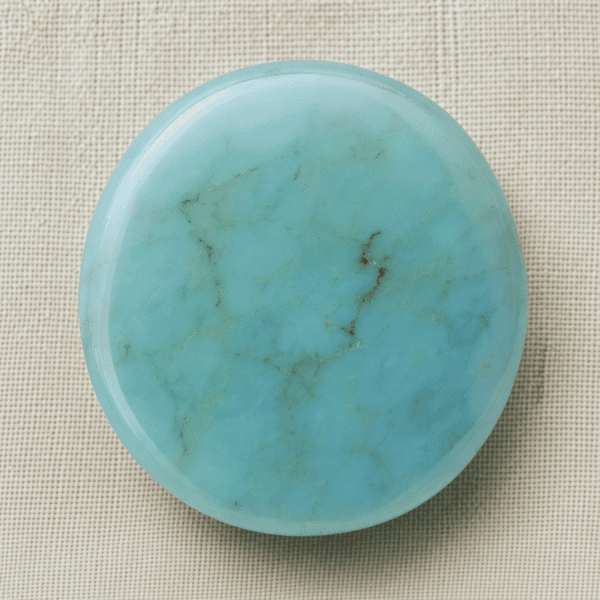
When someone searches “blue opal jewelry,” they are usually picturing the Peruvian material: a soft, sky-blue to blue-green cabochon, sometimes cloudy, sometimes glassy enough to see into. It comes almost exclusively from the Andes in Peru, mined from a handful of deposits that have produced this color since the 1980s. Unlike the sedimentary opal fields of Australia, Peruvian blue opal forms in volcanic host rock, which is part of why its look and its handling differ so much from the opal most of my customers already know. I go through how opal forms generally, sedimentary and volcanic both, in how opals are made.
What gives it that color
The blue in Peruvian blue opal comes from trace copper, the same element that colors turquoise and chrysocolla, bound into the silica as the stone formed. It is a body-color mineral, not a light-effect mineral, so the blue is there whether the stone is moving or sitting still. That is the opposite of precious opal’s play-of-color, which depends entirely on light striking an ordered grid of silica spheres and can vanish if you tilt the stone wrong. GIA’s opal reference treats this copper-colored, non-play-of-color opal as its own recognized category within the broader opal family, separate from the precious material graded on brightness and pattern.
Curious how a blue stone looks set in gold? Browse the opal rings and opal pendants in my current collection, or ask me about a custom piece built around a Peruvian blue opal.
When “blue opal” means play-of-color instead
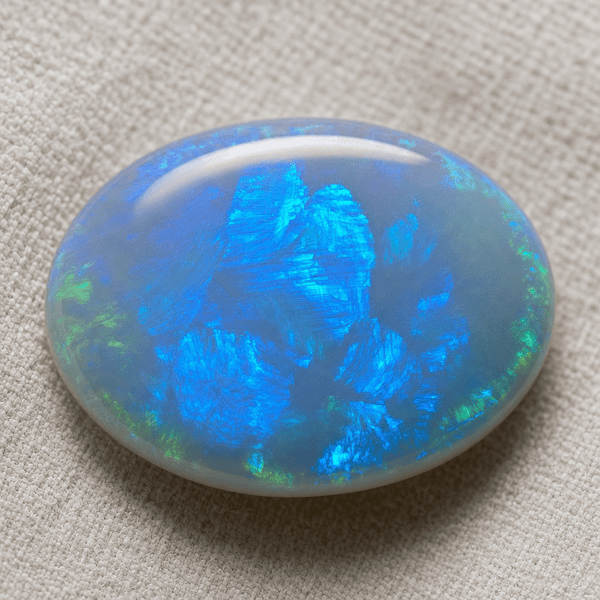
Blue is also the most common play-of-color you will see on ordinary precious opal, more common than green, and both are far more common than the orange and red that collectors chase. So a listing for “blue opal” from an Australian or Ethiopian source can just as easily mean a light or crystal opal whose dominant flash happens to sit in the blue range, with no Peruvian material involved at all. If you want the general background on how that flash works, start with my broader guide to what opal is, then read the play-of-color guide linked above for the physics of why blue turns up so often.
What blue opal is said to mean
Opal generally carries a long history of symbolism, which I cover at length in the meaning of opal. Blue stones specifically get tied to calm and clear communication in a lot of folklore, the same association given to other blue gems like aquamarine and blue topaz. That is tradition and personal meaning, not gemology, and I’d rather say that plainly than dress it up. If the story behind a stone matters to you as much as how it looks, it’s worth choosing a piece for both reasons at once.
Choosing a blue opal ring or necklace
Durability is where the two stones matter most in daily wear. Peruvian blue opal runs about 5 to 6 on the Mohs scale, softer than the precious opal I usually set, and a fair amount of it is hydrophane, meaning it can absorb water and household chemicals over time and change appearance if it’s soaked or worn in the shower. I set it the same cautious way I set any soft, porous stone: a bezel that protects the girdle, and a plain word to the customer about keeping it away from lotion, dish soap, and swimming pools. Blue play-of-color precious opal wears like any other precious opal I sell, 5.5 to 6.5 on the Mohs scale, no special water sensitivity beyond the usual opal caution against extreme dryness. For a pendant or necklace, either stone works well since it isn’t taking the daily knocks a ring does, but I’d still steer a ring toward a protective bezel over open prongs either way.
Both stones earn the name blue opal honestly. Which one is right for you comes down to whether you’re drawn to a steady wash of sky blue or a flash of color that shifts every time the light does. Browse the opal rings and opal pendants in my shop, or get in touch and tell me which kind of blue you have in mind.

Richard Lewis has worked at the jeweler’s bench for more than fifty years. He trained at the Revere Academy of Jewelry Arts in San Francisco and makes each piece in this shop by hand in his Santa Rosa, California studio. His specialty is natural opal and rare abalone pearls collected off the Mendocino coast over thirty years. More about Richard.