Opal is the stone people ask me about most, and also the one they understand least. The name gets used loosely, the types blur into one another, and a fair amount of myth has attached itself over the years. So here is the plain answer to the question I hear across the counter most weeks: what actually is an opal? After fifty years of cutting and setting them, this is how I explain it.
What opal is made of
Opal is hardened silica with water trapped inside it. Tiny spheres of silica settled and set over a very long stretch of time, and a finished opal holds some of that water in its structure, typically six to ten percent by weight in the material I work with, though the GIA’s opal reference puts the full range as wide as three to twenty-one percent across all opal types. That water is unusual for a gem. It is the reason opal sits a little softer than stones like sapphire, and the reason some of it asks for gentle handling. Strictly speaking opal is a mineraloid rather than a mineral, because it has no regular crystal structure. That last point matters more than it sounds, and I will come back to it.
Why an opal is not a crystal
People often call opal a crystal. In the geological sense it is not. A diamond or an amethyst grows in an ordered, repeating lattice. Opal does not. Its silica spheres pack together more like stacked oranges than like a rigid grid, and that disordered structure is exactly what gives the best opal its fire. Light works its way between the spheres and splits into color. Pretty rather than precise, which suits me fine.
Where the word comes from
The name traveled a long way before it landed in English. Most word histories trace opal back through the Latin opalus and the Greek opallios, a word tied to seeing a shift in color, all the way to the Sanskrit upala, which meant nothing grander than precious stone. English writers were using opal by the late 1500s. Opalescent came later, borrowed for the milky shimmer of common opal rather than the flash of the precious kind. And the frosted white “opal glass” some manufacturers use for lampshades and dishware borrowed the name too. There is no actual opal in it.
Precious opal and common opal
There are two broad families. Precious opal shows that shifting rainbow flash we call play-of-color, and it is the one that ends up in fine jewelry. Common opal, sometimes called potch, has no play-of-color at all. It can still be a handsome solid color, like the pink and lavender material sold as pink opal, and a little of it is used in jewelry, but it lacks the magic that makes collectors lose their heads. When someone says “opal” and means the gem, they almost always mean the precious kind. If you want the line drawn more precisely, along with the handful of trade terms in between, like boulder opal, doublets and matrix opal, I lay them all out below.
What counts as opal, and what does not
Because the word sells, it gets borrowed for things that are not opal at all. Here is the boundary line as I hold it when I’m buying:
- Opalite is man-made glass with a milky glow. Cheap, pretty, and not opal at all. The name alone should not cost anyone real-opal money.
- Lab-created opal is real silica grown into the same ordered structure, so it does show genuine play-of-color. Opal in structure, made by people rather than dug from the ground, and an honest seller labels it created.
- Dyed or resin-treated matrix starts as genuine opal-bearing rock that has been helped along. Still opal, but the treatment has to be disclosed, and it changes how you should care for the stone.
- Opalized shell and bone are the real thing. Silica replaced the original material underground, so the fossil is opal through and through.
- Doublets and triplets hold a genuine slice of opal inside an assembled stone. Real opal in part, built rather than solid as a whole. Both are in the sorting-table list below.
Curious to see opal in the metal? Browse the handcrafted opal rings in my collection, or ask me about a custom piece built around a stone you love.
The six forms on my sorting table
A short glossary helps here, since the trade uses a handful of terms loosely and it pays to know what you’re actually holding. These are the six forms that turn up most often when I’m sorting rough, with a photo next to each so you can tell them apart on sight.
 Potch: common opal with no play-of-color, often sitting right alongside a precious seam in the same parcel. I see far more of this than the good stuff in any batch of rough, and it’s usually the first thing I set aside when I’m sorting.
- Body opal: a solid piece of precious opal, cut and polished on its own with nothing behind it. This is what I’m hoping to find when a seam in the rough shows color all the way through. The 2.67 carat Coober Pedy solid in this ring is exactly that kind of stone, and where it lands on the body tone scale is the next thing I’d check.
- Boulder opal: precious opal left attached to its natural ironstone host rather than cut free of it. When the color seam runs thin, I’d rather leave the ironstone underneath for strength than risk cracking a sliver trying to free it.
- Doublet: a thin slice of precious opal glued to a backing, usually black potch or glass, to deepen the color underneath. It’s a manufacturing step, not something that comes out of the ground, so you will never find one in a parcel of rough.
- Triplet: a doublet with a clear cap on top, usually quartz or glass, added for protection. Look closely and the cap gives itself away: a sharp line where the dome meets the opal underneath.
- Matrix opal: precious opal scattered through a porous host rock instead of forming one solid seam. Some matrix on the market has been dyed or resin-treated to deepen that scattered color, which is why I check every piece closely before I’ll buy it.
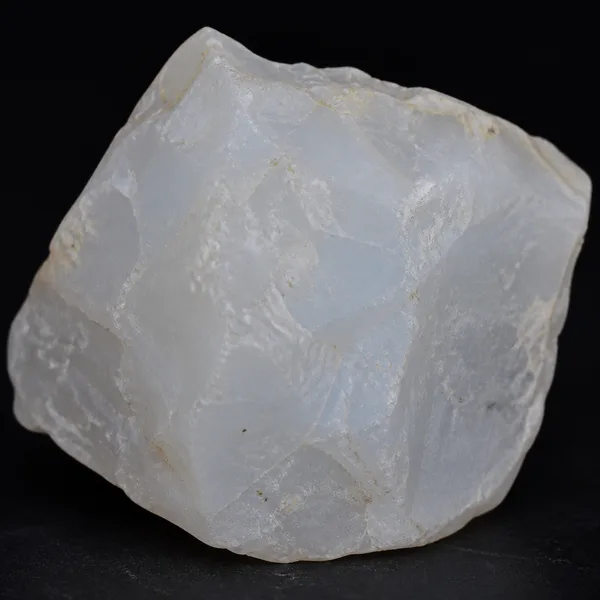
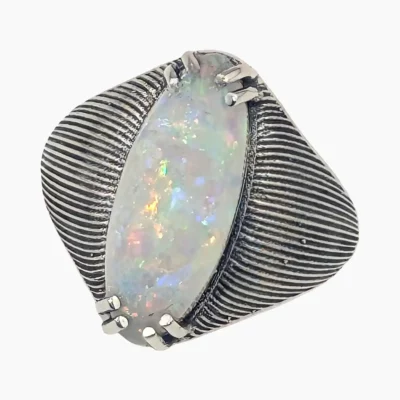
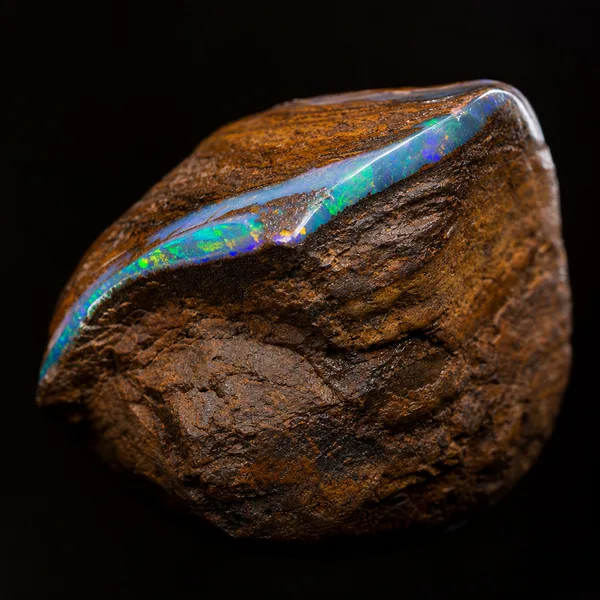
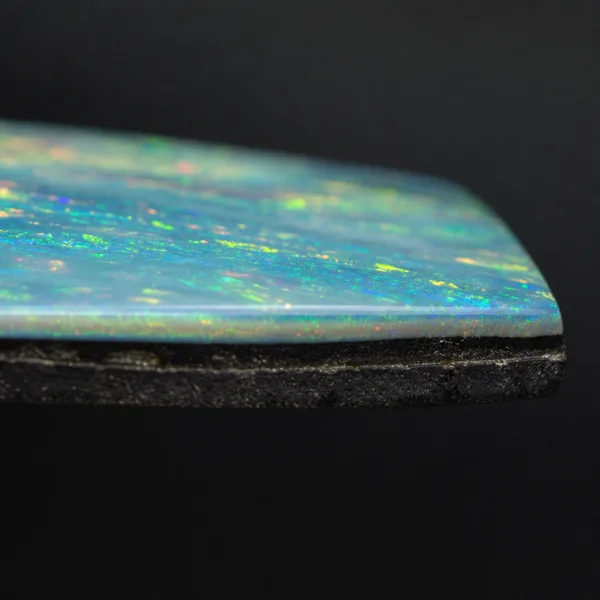
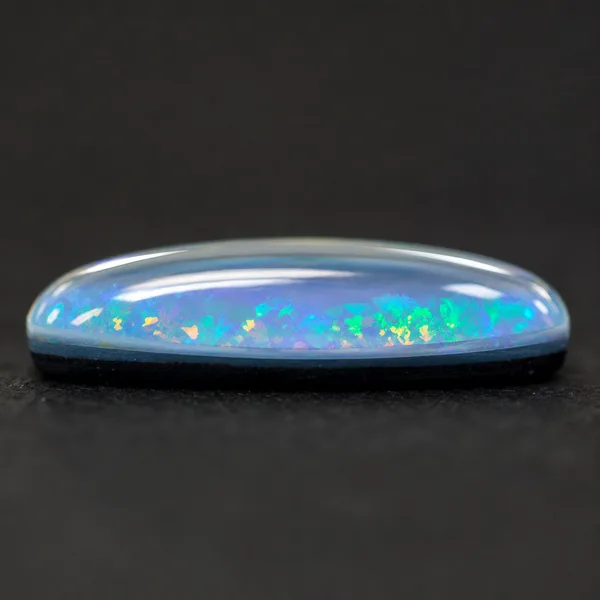
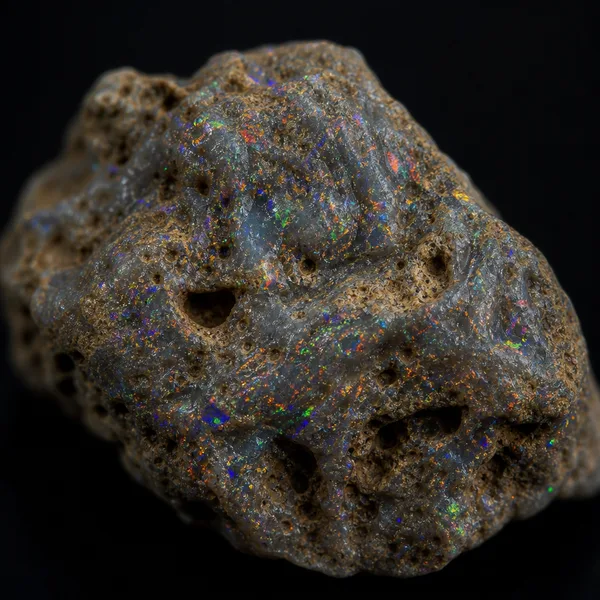
Each of those answers a slightly different version of “what is this opal,” which is why the plain definition above only gets you so far without them.
What an opal looks like
The body of the stone, what we call its body tone, runs from black through gray to milky white and on to water-clear, and I lay out the whole scale in dark opal and the opal body tone scale. Against a dark body the colors look deepest, which is why black opal sits at the top of the price tree. Against a pale body the same colors read softer and more pastel. The flashes themselves are most often blue and green, with orange and red being far rarer, and that play-of-color blue is a different animal from the milky solid-color blue opal some sellers offer. I put the patterns side by side in my visual guide to what opal looks like.
Where opal comes from
Australia has produced most of the world’s precious opal for more than a century and is still the benchmark, and the black opal fields around Lightning Ridge remain the country’s most famous ground. Ethiopia became a major source in the last fifteen years and brought bright stones at friendly prices. Mexico is known for warm fire opal, and there are smaller deposits in Brazil, the United States and a handful of other places. If you are curious how the stone actually forms underground, I cover that in how are opals made, and if you want to see what it takes to actually dig one out of the ground, I walk through that in mining for opals.
Is opal a birthstone?
Yes. Opal is the birthstone for October, which it shares with tourmaline, and it is also the traditional gift for a fourteenth wedding anniversary. That October tie is part of why it has stayed such a popular gift stone, and it feeds into the meaning people attach to opal, from the old bad-luck myth to what it symbolizes today.
Frequently asked questions
Is opal a gemstone or a mineral? It is a gemstone, but technically a mineraloid rather than a true mineral, because it lacks the ordered crystal structure that defines a mineral. It is still very much a precious gem.
What is the difference between precious and common opal? Precious opal shows play-of-color, the rainbow flash. Common opal, or potch, does not, though it can be an attractive solid color in its own right.
Is opal expensive? It ranges enormously, from modest white opal to black opal among the priciest gems of all. Body tone is the biggest factor, with brightness and the amount of red close behind. I break it down in how much is opal worth.
That is opal in plain terms. If you would like to go further, my full guide to understanding opal covers the types, color and value in one place. Or browse the handmade opal rings in my collection and see the stone for yourself.

Richard Lewis has worked at the jeweler’s bench for more than fifty years. He trained at the Revere Academy of Jewelry Arts in San Francisco and makes each piece in this shop by hand in his Santa Rosa, California studio. His specialty is natural opal and rare abalone pearls collected off the Mendocino coast over thirty years. More about Richard.